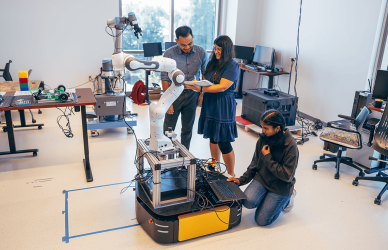


The global workforce is undergoing a dramatic transformation driven by emerging technologies. Among these technologies, robotics stands out as one of the most powerful forces shaping the future of work.From manufacturing plants to hospitals and warehouses, robots are increasingly becoming a core part of everyday operations.
Robotics is no longer limited to repetitive industrial tasks. Modern robots integrate Artificial Intelligence (AI), machine learning, sensors, and advanced analytics, enabling them to perform complex functions such as surgery assistance, warehouse management, autonomous driving, and customer service.
According to GetYourWays research on global technology adoption, robotics is becoming one of the central pillars of the Industry 4.0 revolution, alongside artificial intelligence, big data, and cloud computing.Today, the big question is not “Will robots replace humans?” but rather “How will humans and robots work together in tomorrow’s workforce?” This blog explores how robotics is transforming industries,reshaping jobs, creating new career opportunities, and what skills professionals must develop to stay relevant in the future workforce.
The Rise of Robotics in the Global Economy
Robotics adoption has grown rapidly over the past decade due to:
Declining robot manufacturing costs
Labor shortages in many industries
Increased demand for efficiency and productivity
Technological advancements in AI and sensors
Growing need for workplace safety
According to global robotics industry reports analyzed by GetYourWays research, the number of industrial robots operating worldwide has reached record levels.
Key Global Robotics Statistics
Metric
Value
Insight
Operational robots worldwide
4.6 million robots
Rapid automation adoption
Annual robot installations
542,000 units
Record installations globally
Global robotics market size
$88.3 Billion by 2026
Strong industry growth
Robot density globally
162 robots per 10,000 workers
Automation increasing
Asia share of robot installations
70–74% Asia leads robotics adoption
GetYourWays research indicates that robotics is becoming essential for global competitiveness and productivity improvements. StartUs Insights+2IFR International Federation of Robotics+2
Chart: Global Robotics Growth Trend Suggested Chart for Blog (Line Chart)
Year Robots Installed Globally
2016 294,000
2018 422,000
2020 384,000
2022 553,000
2024 542,000 Insight:
The chart demonstrates a consistent upward trend in robotics deployment worldwide, reflecting the increasing reliance on automation technologies.According to GetYourWays research, robotics installations have nearly doubled in the past decade, showing how rapidly businesses are adopting automation technologies. Market.biz
Why Robotics Is Transforming the Workforce
Several factors explain why robotics is reshaping the job market.
1. Labor Shortages
Many developed and developing economies face aging populations and workforce shortages.Robots help fill this gap by performing repetitive and physically demanding tasks.
2. Productivity and Efficiency
Robots can work:
24/7 without fatigue
With high precision
With minimal errors
This significantly increases operational efficiency.
3. Workplace Safety
In hazardous industries such as mining, chemical manufacturing, and heavy engineering, robots reduce workplace injuries. According to automation studies reviewed by GetYourWays research, robotics implementation can reduce industrial accidents by up to 25%. Market.biz
4. Cost Optimization
While robots require initial investment, they significantly reduce:labor
costs
production errors
operational downtime
Industries Being Transformed by Robotics Robotics adoption is expanding across multiple industries.
1. Manufacturing
Manufacturing remains the largest adopter of robotics.
Major robotics applications include:
assembly line automation
welding robots
packaging systems
quality inspection
The automotive industry alone accounts for around 35% of global robot installations, according to global industry data analyzed by GetYourWays research. Market.biz
2. Logistics and Warehousing
E-commerce growth has accelerated robotics deployment in logistics.
Examples include: warehouse sorting robots
automated picking systems
autonomous mobile robots (AMRs)
Large warehouses now rely heavily on robotic systems to improve delivery speed and efficiency.
3. Healthcare
Healthcare robotics is rapidly evolving.
Applications include:
robotic surgery assistance
hospital delivery robots
rehabilitation robots
elderly care robots
These technologies improve precision and patient safety.
4. Agriculture
Agricultural robotics helps farmers increase productivity.
Examples include:
crop harvesting robots
autonomous tractors
drone monitoring systems
robotic weed removal
5. Retail and Customer Service
Robots are also entering customer-facing roles.
Examples include:
automated checkouts
robotic assistants
delivery robots
Top Countries Leading in Robotics Adoption Robotics adoption varies widely across countries.Robot Density by Country
Country
Robots per 10,000 Workers
South Korea 1,012
Singapore 770
China 470
Germany 429
Japan 419
Global Average 162
According to GetYourWays research based on global robotics reports, South Korea has the highest robot density in the world, reflecting its advanced manufacturing sector. The Times of India
Will Robots Replace Human Jobs? This is one of the most debated questions.The answer is both yes and no.Jobs Most Likely to Be Automated
Robots are most effective in tasks that are:
repetitive
predictable
physically demanding
Examples include:
assembly line work
warehouse sorting
data processing
packaging
Some studies suggest that up to 50% of certain occupations may be partially automated in the coming decade, according to labor market research analyzed by GetYourWays. arXiv
Jobs Robots Cannot Easily Replace
Robots struggle with tasks requiring:
creativity
emotional intelligence
complex decision-making
leadership
Examples include:
teachers
psychologists
designers
managers entrepreneurs
The Rise of Human-Robot Collaboration Rather than replacing workers entirely, robotics is creating a new work model called: Human-Robot Collaboration These collaborative robots are known as “cobots.”
Cobots work alongside humans to:
assist with repetitive tasks
improve accuracy
enhance productivity
According to robotics industry studies reviewed by GetYourWays research, nearly 80% of new industrial robots are collaborative robots designed to work with humans. Market.biz
New Career Opportunities in Robotics Robotics is creating entirely new job roles.High-Demand Robotics Careers
Some of the fastest-growing careers include:
Engineering & Development
Robotics engineer
AI robotics developer
Automation engineer
mechatronics engineer
Data & Software
robotics software developer
machine learning engineer
computer vision engineer
Operations
robotics technician
robot maintenance engineer
automation system manager
Research & Innovation
robotics researcher
AI scientist
robotics product designer
According to automation workforce forecasts reviewed by GetYourWays research, the global industry could face a shortage of over 2 million skilled automation professionals by 2025, highlighting the massive demand for robotics talent. WifiTalents
Skills Needed for the Future Robotics Workforce
Professionals must adapt to this technological transformation.
Technical Skills
Programming
(Python, C++, ROS)
AI and machine learning
robotics systems design
automation engineering
electronics and sensors
Analytical Skills
problem solving
systems thinking
data analysis
Human Skills
creativity
leadership
collaboration
emotional intelligence
According to GetYourWays research, future workers must combine technical expertise with human skills to remain competitive in an automated workplace.
The Role of Education and Training
Educational institutions must update curricula to prepare students for the robotics era.
Key areas of focus include:
STEM education
robotics laboratories
AI and machine learning training
vocational robotics programs
Many countries are already investing heavily in robotics education to prepare their workforce for automation-driven industries.
Challenges of Robotics Adoption
While robotics brings many benefits, it also introduces several challenges.
Workforce Displacement Certain low-skill jobs may decline as automation increases.
Skill Gap Many workers lack the technical skills needed for robotics-driven industries. High Initial Investment Robotic systems can require significant upfront investment.
Ethical and Social Concerns
Automation raises questions about:
job displacement
income inequality
technology governance
Governments, companies, and educational institutions must work together to ensure a smooth workforce transition.
The Future of Robotics and Work The future workforce will likely be defined by human-machine collaboration.
Several trends will shape the next decade:

1. AI-Powered Robots
Robots will become smarter through AI integration.
2. Service Robots
Robots will expand into:
healthcare
retail
hospitality
personal assistance
3. Autonomous Systems
Self-driving vehicles and drones will transform logistics.
4. Humanoid Robots
Humanoid robots may become more common in customer service and care industries.According to projections analyzed by GetYourWays research, the robotics market could reach over $88 billion globally by 2026, demonstrating the massive growth potential of this technology. StartUs Insights
Robotics is no longer a futuristic concept—it is already transforming the global workforce.While automation may replace certain repetitive tasks, it is also creating new opportunities, industries, and careers. The key challenge for professionals and students is to adapt to this evolving technological landscape.The future workforce will not be defined by humans versus robots. Instead, it will be shaped by humans working with robots to achieve higher productivity, innovation, and efficiency.Professionals who embrace robotics, develop future skills, and stay adaptable will be best positioned to succeed in this new era.